

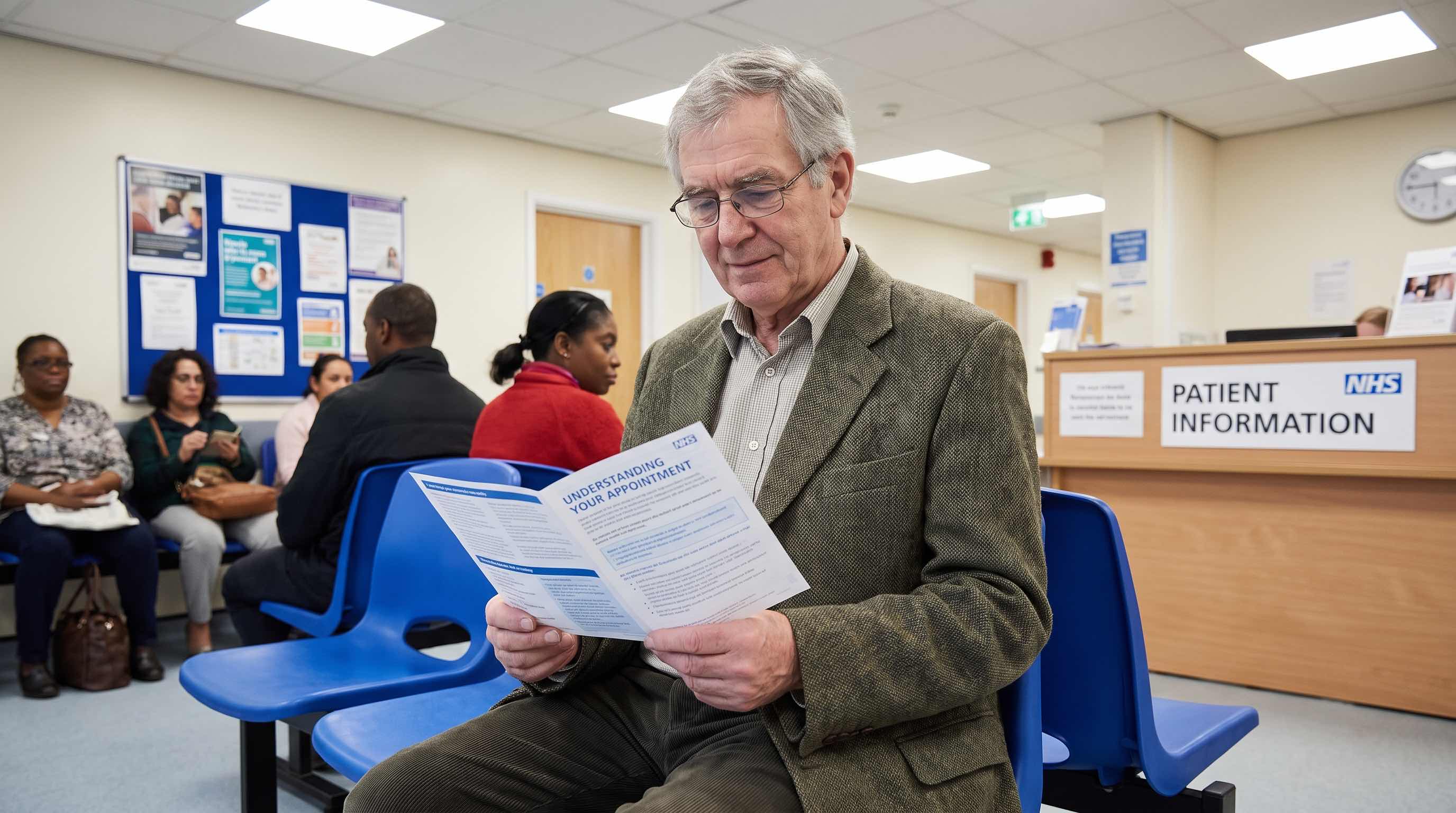
The morning they remove your catheter — usually around one to two weeks after a radical prostatectomy — nobody warns you quite how startling that first uncontrolled leak will be. You have just come through major surgery at an NHS trust, you have been told the cancer is out, and now you are standing in a hospital corridor in a paper gown wondering whether you will ever feel in control of your own body again. This guide walks you through exactly what the NHS recovery path looks like, week by week, from that first catheter removal to the point where most men regain reliable continence. It is based on guidance from NHS England, NICE, the British Association of Urological Surgeons (BAUS), and Prostate Cancer UK — and it is honest about the timeline, the setbacks, and the practical things you can do right now to speed recovery.
Why Does Prostatectomy Cause Incontinence?
The prostate sits directly beneath the bladder and wraps around the urethra. During a radical prostatectomy — whether performed robotically (RALP) or by open surgery — the prostate is removed along with the seminal vesicles, and the urethra is then rejoined directly to the bladder neck. This reconstruction inevitably disrupts the internal urethral sphincter, which was partially housed within the prostate itself.
Continence after surgery therefore depends almost entirely on the external urethral sphincter, a voluntary muscle controlled by the pelvic floor. That muscle has been stretched, compressed, and deprived of its usual anatomical neighbours. The good news is that, unlike nerve damage, muscle weakness responds well to targeted rehabilitation. NICE clinical guideline NG131 on prostate cancer recommends that all men undergoing radical prostatectomy are offered pelvic floor muscle training (PFMT) both before and after surgery.
BAUS data suggest that immediately after catheter removal, around 85–90% of men experience some degree of urinary leakage. By 12 months post-surgery, roughly 85–90% of men achieve what is clinically defined as social continence (using no pads or just one small pad per day). The remaining 10–15% may require further intervention. Knowing this curve exists — and where you sit on it — makes the early weeks far less alarming.
The NHS Recovery Pathway: Week by Week
Before Surgery: Prehabilitation
Most NHS urology departments now offer pre-operative physiotherapy, sometimes called prehabilitation. A continence nurse specialist or pelvic health physiotherapist will teach you how to correctly identify and contract your pelvic floor muscles before the operation. Research consistently shows that men who begin PFMT before surgery regain continence significantly faster afterwards. If your trust did not arrange this, ask your urology nurse specialist — it is never too late to start learning the technique.
Days 1–14: Catheter Period and Discharge
Following surgery, a urethral catheter drains the bladder continuously while the anastomosis (the join between bladder and urethra) heals. Most NHS trusts remove the catheter between day 7 and day 14. Before removal, a cystogram (an X-ray using contrast dye) is sometimes performed to confirm the join has sealed adequately.
Discharge typically happens the same day as catheter removal, or the day before. Your urology team should send you home with:
- A written care plan from your clinical nurse specialist
- Referral to a community continence nurse specialist or pelvic health physiotherapist
- Contact details for NHS 111 and the urology advice line
- Information on what symptoms to report urgently (signs of urinary tract infection, blocked urethra, or heavy bleeding)
In practice, the quality of this discharge support varies across NHS trusts. Prostate Cancer UK's specialist nurses (0800 074 8383) can help fill gaps if your local pathway falls short.
Weeks 2–6: The Hardest Stretch
This is the period most men find genuinely difficult. Leakage is typically at its worst in the first four to six weeks. It is heaviest with activity: standing up, coughing, sneezing, lifting anything, or walking quickly. Many men are surprised to find that leakage is less severe lying down or sitting still — this is because the external sphincter bears less gravitational load in those positions.
Your community continence nurse specialist should see you within this window. They will assess the volume of leakage (often using a 24-hour pad weight test), review your pelvic floor exercise technique, and recommend appropriate containment products. If you have not yet received a referral, ask your GP to arrange one — this is a standard NHS pathway, not a private add-on.
During this phase, pelvic floor exercises should be practised multiple times daily. The standard NHS-recommended regimen involves:
- Slow contractions: Squeeze and lift the pelvic floor muscles, hold for 10 seconds, then fully relax. Repeat 8–10 times.
- Fast contractions: Quick squeeze-and-release, repeated 10 times.
- Aim for three to four sessions per day, every day.
The "knack" manoeuvre is also worth learning early: contracting the pelvic floor just before and during a cough or sneeze to prevent stress leakage. It takes practice but becomes automatic over time.
Weeks 6–12: Gradual Improvement
For most men, weeks six to twelve bring measurable progress. Pad usage typically begins to reduce. Many men move from several heavy pads daily to one or two lighter ones. Night-time leakage is usually the first to resolve — the supine position reduces sphincter load, and bladder activity slows during sleep.
Your physiotherapist or continence nurse may introduce bladder retraining at this stage — structured techniques for gradually extending the time between toilet visits and resisting urgency. This addresses the overactive bladder symptoms that sometimes accompany post-prostatectomy incontinence.
Your six-week GP or urology follow-up is an important checkpoint. Raise any concerns about leakage volume, pain, or psychological impact. Depression and anxiety are underreported sequelae of incontinence after prostate surgery; your GP can refer you to talking therapies or a cancer support worker if needed.
Months 3–6: Continued Rehabilitation
NICE guidance makes clear that pelvic floor rehabilitation should continue for at least three to six months post-operatively. Men who plateau at three months and feel discouraged should be reassured: recovery can — and frequently does — continue for up to 18–24 months after surgery, albeit at a slower pace.
If leakage has not significantly improved by six months, your continence nurse specialist or urologist may consider:
- Urodynamic testing to characterise the type and cause of leakage more precisely
- Bulking agent injections to improve sphincter coaptation
- Male sling surgery (e.g., AdVance sling), funded by NHS for appropriate candidates
- An artificial urinary sphincter (AUS), offered for more severe, refractory incontinence
Beyond 12 Months
BAUS figures indicate that by 12 months, the large majority of men have reached their functional continence plateau. Those who have not should be in active discussion with their urology team about surgical options. Social continence — defined by BAUS and most urologists as zero to one pad per day — is achievable for most men with the right support.


Practical Self-Help During Recovery
Alongside formal rehabilitation, several evidence-based lifestyle adjustments make a meaningful difference to leakage severity:
- Fluid intake: Drink 1.5–2 litres of fluid daily. Restricting fluids concentrates urine, irritates the bladder lining, and paradoxically worsens urgency. Avoid cutting back dramatically.
- Caffeine and alcohol: Both are bladder irritants. Reducing coffee, tea, and alcohol — at least in the early months — can reduce urgency and frequency.
- Constipation: Straining during bowel movements places significant downward pressure on the pelvic floor. A high-fibre diet and adequate hydration help prevent this.
- Weight management: Excess abdominal weight increases intra-abdominal pressure and worsens stress leakage. Even modest weight loss can improve symptoms.
- Return to exercise: Walking is encouraged from week two. High-impact exercise (running, racket sports, heavy lifting) should generally be avoided until at least week eight, and only reintroduced gradually with guidance from your physiotherapist.
Choosing the Right Protection During Recovery
Containment products are a legitimate, medically recognised part of post-prostatectomy recovery — not a sign of failure. The right product protects your skin, preserves your dignity, and allows you to re-engage with everyday life while rehabilitation continues.
In the early, high-volume weeks, NHS community continence services can prescribe disposable pads. As leakage reduces to light or moderate levels, many men prefer to transition to washable incontinence boxer briefs — more comfortable, more discreet, and significantly more economical over the months of recovery.
Orykas UK's washable incontinence boxer briefs are designed specifically for men managing bladder leaks, with an integrated absorbent bamboo-fibre panel that wicks moisture away from the skin and locks it away without bulk. The range includes:
- Men's Washable Incontinence Boxer — the single-pair option, ideal for trying out fit and absorbency level before committing to a multipack.
- 3 Pack Men's Light Leak Boxer Briefs — designed for the light leakage that typifies weeks six onwards, when you are emerging from the heaviest phase of recovery.
- 3 Pack Ultra Absorbent Men's Incontinence Briefs — higher absorbency for the earlier, heavier weeks, or for active men who find that exercise still triggers significant leakage at the three-to-six month stage.
All Orykas UK incontinence boxer briefs are made from OEKO-TEX Standard 100 certified bamboo fibre — free from harmful chemicals and gentle on post-surgical skin. They are machine-washable at 40°C and, with proper care, carry a two-to-three year lifespan, making the cost per use a fraction of disposables over a full recovery period.
VAT relief: Men with chronic incontinence following prostatectomy may be entitled to purchase eligible continence products free of VAT under the HMRC disability-products scheme. Orykas UK can apply VAT relief at checkout — simply complete the eligibility declaration. Your continence nurse specialist or GP can confirm whether your condition qualifies.

Related Orykas UK Advice
- What are the best protection options for men with bladder leaks?
- Urinary incontinence after prostate surgery: how long does it last and what are the solutions?
- How to stop urinary leaks in men?
- Urinary Leaks and the Prostate: Understanding the Connection
- Why do I have urinary leaks after I have finished urinating?
Frequently Asked Questions
How long does post-prostatectomy incontinence typically last on the NHS pathway?
Most men reach social continence (zero to one pad per day) within 6–12 months of surgery, provided they engage consistently with pelvic floor rehabilitation. BAUS data suggest around 85–90% of men achieve this level by 12 months. A minority continue to improve beyond that point, and for those with persistent significant leakage, NHS surgical options such as a male sling or artificial urinary sphincter are available.
Will my NHS trust provide pelvic floor physiotherapy after surgery?
NICE guideline NG131 recommends that all men undergoing radical prostatectomy are offered pelvic floor muscle training. In practice, access varies by trust. If your discharge pack did not include a physiotherapy or continence nurse referral, ask your GP or urology clinical nurse specialist to arrange one — you are entitled to this support as part of your cancer aftercare pathway.
Is it safe to exercise with post-prostatectomy incontinence?
Yes, and exercise is encouraged. Light walking can begin from approximately week two post-operatively. More vigorous activity — running, cycling, resistance training — should be reintroduced gradually from around week eight, guided by your physiotherapist. Exercise helps maintain a healthy weight (reducing intra-abdominal pressure on the bladder), supports pelvic floor recovery, and benefits mental health during what can be a difficult period.
When should I contact my GP or NHS 111 about my incontinence symptoms?
Contact your GP or call NHS 111 if you experience: a sudden significant worsening of leakage; burning or pain when passing urine (which may indicate a urinary tract infection); inability to pass urine at all; blood in the urine; or if leakage is causing significant distress or depression. Do not wait until your next scheduled follow-up if something concerns you — your urology team's advice line is there precisely for this.
Can I claim VAT relief on washable incontinence products?
Yes. Under HMRC's zero-rating scheme for goods for disabled people, men with a chronic condition causing incontinence — which post-prostatectomy incontinence typically qualifies as — are entitled to purchase eligible continence products free of the standard 20% VAT. This applies to purpose-designed washable incontinence underwear such as those sold by Orykas UK. You will need to complete a VAT relief declaration at the time of purchase confirming your eligibility; your GP or continence nurse specialist can confirm your condition meets the HMRC criteria.
Sources and further reading: NHS England — Prostate Cancer Treatment (nhs.uk); NICE Guideline NG131: Prostate Cancer: Diagnosis and Management (nice.org.uk); British Association of Urological Surgeons (BAUS) — Patient Information on Radical Prostatectomy (baus.org.uk); Prostate Cancer UK — Managing Urinary Problems After Surgery (prostatecanceruk.org); Bladder & Bowel UK — Male Incontinence Resources (bladderandbowel.org). This article is intended for general information only and does not constitute medical advice. Always consult your NHS clinical team regarding your individual circumstances and treatment pathway.
Share:
10 Sports You Can Still Do With Bladder Leaks in the UK
150ml vs 600ml Incontinence Boxer: Which Absorbency Do You Actually Need?