

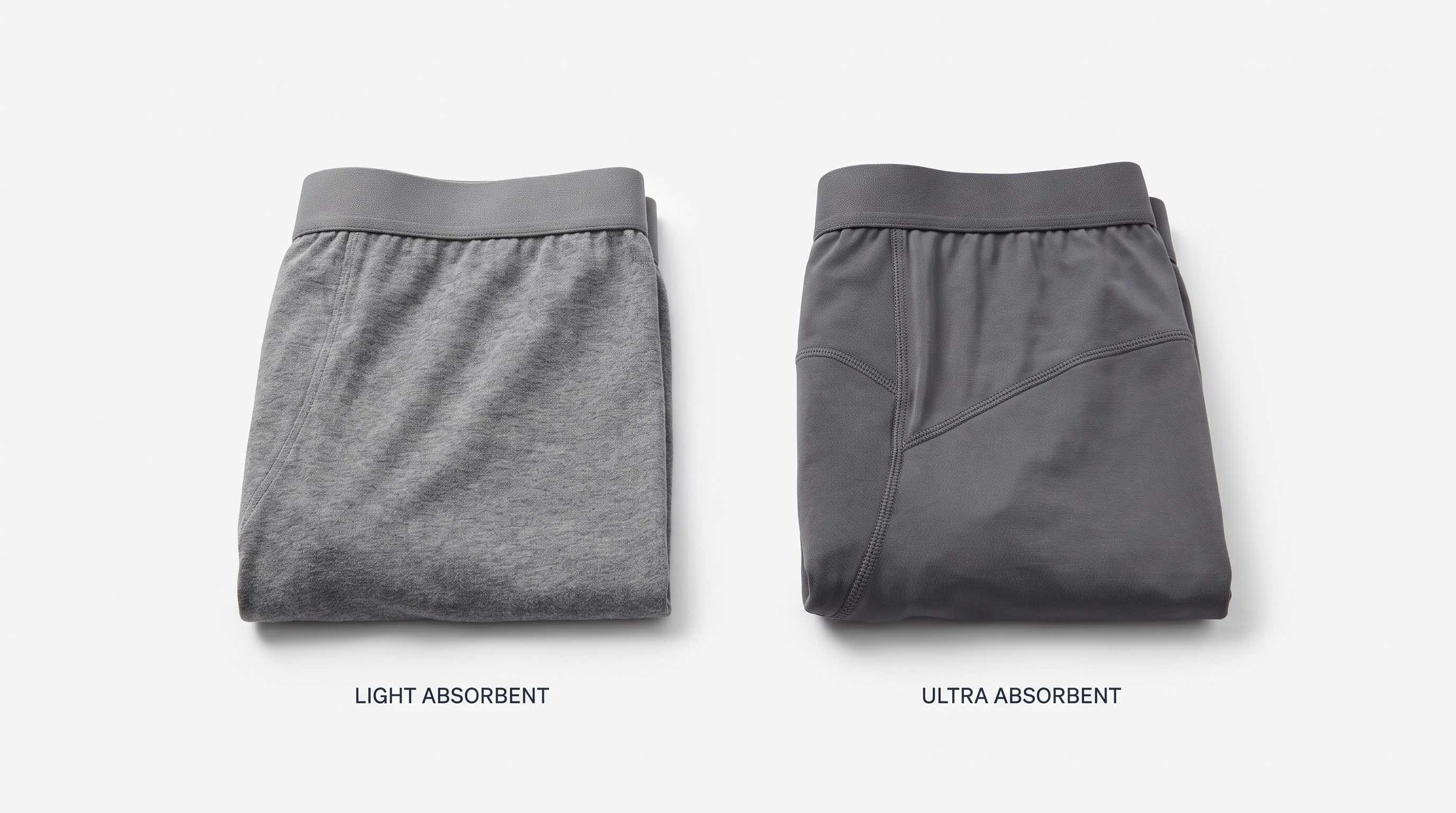
The most common mistake British men make when buying their first pair of washable incontinence boxer briefs is guessing. They pick a product based on how they imagine their leakage compares to someone else's, or they default to the cheapest option and hope for the best. Within a fortnight, they're either soaking through their underwear by mid-morning or wearing far more protection than they actually need — and feeling unnecessarily uncomfortable about it. Getting the absorbency right from the start changes everything: it means you feel confident leaving the house, you're not bulk buying disposables month after month, and you're treating a manageable health condition with the practical, dignified solution it deserves.
This guide will walk you through exactly what the 150ml and 600ml absorbency levels mean in real terms, which type of leakage each is designed to handle, and how to work out — honestly and without embarrassment — which is the right choice for you.
Understanding Absorbency: What Do the Numbers Actually Mean?
Absorbency ratings on washable incontinence underwear are measured in millilitres (ml) and reflect how much fluid the garment can absorb before leaking. This is tested under standardised laboratory conditions, so the figures give you a reliable baseline — though real-world performance can vary slightly depending on the speed of the leak, your body shape, and how snugly the garment fits.
For context, a standard teaspoon holds approximately 5ml. A small splash — the kind of post-micturition dribble that leaves a damp patch the size of a 50p coin — might amount to 5–15ml per episode. A moderate leak triggered by a cough or sneeze might release 20–50ml. A significant urgency episode, the kind where you don't quite make it to the bathroom in time, can easily exceed 100ml or more.
According to Bladder & Bowel UK, an estimated 14 million people in the UK live with bladder problems, yet fewer than half seek help or use appropriate products — largely because of the stigma still attached to incontinence. Understanding the numbers takes some of that mystery away and puts you in control of your own health choices.
The 150ml Absorbency Boxer: Ideal for Light, Everyday Leaks
A 150ml washable incontinence boxer is designed for men experiencing light to moderate leakage. This is the most common category for men who are new to incontinence protection, and it covers a wider range of situations than many people initially expect.
Who is the 150ml level right for?
- Post-micturition dribble (terminal dribble): The most prevalent form of bladder leakage in men, caused when a small amount of urine remains in the urethra after urinating and leaks out moments later. The British Association of Urological Surgeons (BAUS) notes this is extremely common, particularly in men over 50, and is often related to weakened pelvic floor muscles or an enlarged prostate.
- Mild stress incontinence: Leaks triggered by physical activity — lifting, laughing, sneezing, or exercise — where the volume per episode is small but the frequency throughout the day adds up.
- Early-stage post-prostatectomy recovery: Men who are several months post-surgery and whose continence is steadily improving may find a 150ml garment entirely sufficient as they progress through pelvic floor rehabilitation.
- Occasional urgency: If you're managing overactive bladder (OAB) with medication and lifestyle changes, and your leaks are infrequent and relatively small, the 150ml level provides appropriate cover without being excessive.
Pros of the 150ml boxer
- Slimmer, more discreet profile — looks and feels closer to standard underwear
- Lighter fabric weight means more comfortable in warm weather
- Faster drying time after washing
- Often available in multipacks, reducing the cost per garment
- Sufficient for the majority of men with light daily leakage
Cons of the 150ml boxer
- Not suitable for heavier or more frequent leakage — may not last a full day if episodes are large or numerous
- Less appropriate for post-prostatectomy in the immediate recovery period (first few months)
- Can feel insufficient if your leakage varies significantly by day

The 600ml Absorbency Boxer: Built for Heavier or More Frequent Leakage
A 600ml washable incontinence boxer is a high-capacity garment designed for men dealing with moderate to heavy leakage — whether that's large-volume individual episodes, frequent smaller leaks throughout the day, or a combination of both. It's the category most often recommended by continence nurse specialists for men in the earlier stages of post-surgical recovery or those living with more significant overactive bladder symptoms.
Who is the 600ml level right for?
- Post-prostatectomy (radical prostatectomy) — early to mid recovery: According to the NHS, urinary incontinence following prostate removal is very common, with many men experiencing significant leakage in the weeks and months after surgery. A 600ml garment provides the coverage needed to manage daily life with confidence during this period.
- Moderate to severe OAB: If urgency episodes result in substantial leakage before you reach the bathroom, a 150ml product is unlikely to be adequate. The 600ml capacity provides a meaningful safety margin.
- Mixed incontinence: Some men experience both stress and urgency incontinence simultaneously. Combined episodes can quickly exceed what lighter-capacity garments can handle.
- High-frequency leakage: Even if each individual episode is relatively small, if you're leaking ten or more times per day, the cumulative total may comfortably exceed 150ml by lunchtime.
- Active men with significant stress incontinence: Men who exercise regularly or have physically demanding jobs may find that movement triggers multiple larger leaks throughout the day.
Pros of the 600ml boxer
- High capacity provides all-day protection for most moderate to heavy leakage patterns
- Reduces the need to change garments during the day
- Confidence for longer outings, travel, or work days where bathroom access is limited
- Suitable for nights if nocturia (waking to urinate) is a concern, though specific night products may also be worth considering
- Particularly valuable in post-surgical recovery, reducing anxiety about leaks in public
Cons of the 600ml boxer
- Slightly bulkier profile than lighter-capacity options
- Takes a little longer to dry after machine washing
- May be more than necessary for men with very light or infrequent leakage, resulting in unnecessary discomfort

How to Measure Your Leakage Honestly (and Why It Matters)
The most reliable way to choose the correct absorbency is to keep a bladder diary for 3–5 days. The NHS recommends this approach as a first step before any consultation with your GP or continence nurse specialist. A bladder diary records:
- How much fluid you drink and when
- How often you urinate
- Whether you experience urgency or leakage, and approximately how much
You don't need precise measurements — a rough estimate of small (a damp patch), medium (noticeable wetness through to clothing), or large (a significant volume) is a useful starting point. The Continence Foundation of Australia's international guidelines, widely referenced by UK continence nurses, suggest that a standard pad-weighing test (weighing a pad before and after use to estimate leakage in grams, which approximates to millilitres) is the most accurate home method, though your continence nurse can guide you through this.
If you haven't yet spoken to your GP about bladder leakage, this is worth doing. Incontinence is a medical symptom, not an inevitable consequence of ageing, and there are often treatable underlying causes — from an enlarged prostate to a urinary tract infection to pelvic floor weakness that responds well to targeted exercises. The NHS offers free continence assessments through most GP surgeries and community continence services. You can also call NHS 111 for guidance on the most appropriate next step for your situation.
A Practical Decision Framework: Which Should You Choose?
If you're still unsure after reading the descriptions above, use this straightforward framework:
| Your situation | Recommended absorbency |
|---|---|
| Post-micturition dribble only | 150ml |
| Occasional stress leaks (sneezing, lifting) | 150ml |
| OAB well-managed with medication, infrequent leaks | 150ml |
| Post-prostatectomy (3+ months, improving) | 150ml or 600ml depending on current volume |
| Post-prostatectomy (0–3 months) | 600ml |
| Moderate to heavy OAB or urgency episodes | 600ml |
| Mixed incontinence (stress + urgency) | 600ml |
| Uncertain — leakage varies significantly | Start with 600ml for security, reassess in 4–6 weeks |
One useful principle from continence specialists: when in genuine doubt, err on the side of more capacity. Wearing a slightly higher-capacity garment than you strictly need is far less disruptive than dealing with a leak through your clothing.

Orykas UK Product Recommendations
Orykas UK's washable incontinence boxer briefs are made from OEKO-TEX Standard 100 certified bamboo fibre — a naturally breathable, moisture-wicking material that draws fluid away from the skin rapidly and helps control odour. All garments are machine-washable at 40°C and are designed to last 2–3 years with proper care, making them a significantly more cost-effective and environmentally responsible choice than disposable products over time.
For light to moderate leakage: 3 Pack Men's Light Leak Boxer Briefs
An ideal starting point if your assessment suggests you fall into the light absorbency category. The multipack format gives you enough garments to rotate comfortably through the week without daily washing. The slim-profile design means these wear and look like standard boxer briefs.
For moderate to heavy leakage: 3 Pack Ultra Absorbent Men's Incontinence Briefs
Designed for men who need reliable, high-capacity protection throughout the day. Particularly well-suited to post-prostatectomy recovery and more significant OAB symptoms, this multipack gives you the practical volume of garments needed without over-reliance on disposables.
For a single trial garment: Men's Washable Incontinence Boxer
If you're not yet ready to commit to a multipack, the single boxer is an excellent way to trial the absorbency level, the fit, and the bamboo fibre material before purchasing in bulk. Many men find it useful to trial a 600ml garment first — even if they ultimately move to 150ml once their leakage pattern is better established.
VAT relief on incontinence products
If you have a chronic or long-term bladder condition, you may be eligible for VAT relief under HMRC's disability-products scheme, which applies to incontinence products purchased for personal use. This can reduce the cost of washable incontinence underwear by 20%. You'll need to self-certify that the product is for a medical condition — Orykas UK can provide guidance on how to apply this at checkout. It's worth checking HMRC's current guidance or speaking with your GP to confirm eligibility.
Related Orykas UK Advice
- What are the best protection options for men with bladder leaks?
- Urinary incontinence after prostate surgery: how long does it last and what are the solutions?
- How to stop urinary leaks in men?
- Urinary Leaks and the Prostate: Understanding the Connection
- Why do I have urinary leaks after I have finished urinating?
Frequently Asked Questions
Can I wear a 600ml boxer for light leakage just to be safe?
Yes — there's no harm in wearing a higher-capacity garment than you strictly need. The main trade-off is a slightly bulkier feel and a marginally longer drying time. Many men find the extra security worth it, particularly early on before they have a clear picture of their leakage patterns. As your confidence grows and your leakage stabilises (especially post-surgery), you may choose to move to a lighter absorbency level.
How often should I change my washable incontinence boxer during the day?
This depends entirely on your absorbency level and how much you're leaking. As a general guide, continence nurse specialists recommend changing when the garment has reached roughly two-thirds of its capacity — don't wait until you feel soaked through. For most men with light leakage and a 150ml boxer, once a day (changed in the morning and evening) may be sufficient. For heavier leakage and a 600ml garment, you may still want to change once mid-day. A bladder diary will help you identify your personal pattern.
Are washable incontinence boxers suitable to wear overnight?
For men with mild nocturia or post-micturition dribble on waking, yes — particularly the 600ml option. However, if you experience significant overnight leakage, a dedicated night-time product with a longer design and higher capacity may be more appropriate. Speak with your continence nurse specialist about night-time options if daytime garments aren't sufficient.
How long will a washable incontinence boxer last before it loses its absorbency?
Orykas UK's bamboo fibre boxer briefs are designed for a lifespan of 2–3 years with regular washing at 40°C. To preserve absorbency, avoid fabric conditioner (it coats the fibres and reduces their ability to wick moisture), tumble dry on a low setting or air dry, and follow the care label instructions carefully. Some reduction in absorbency is normal towards the end of the product's lifespan — if you notice performance declining, it's time to replace.
Should I speak to my GP before choosing incontinence underwear?
Choosing the right absorbency level is something you can do yourself using the guidance in this article. However, if you haven't yet discussed your bladder leakage with your GP, it's genuinely worth doing so — not just to get the product choice right, but because incontinence often has an underlying and treatable cause. Your GP may refer you to a continence nurse specialist, prescribe medication for OAB, or recommend a referral to urology. The NHS and BAUS both emphasise that bladder leakage is a medical issue that responds well to treatment in the majority of cases. You can also call NHS 111 for initial guidance without needing to book a GP appointment.
Sources and further reading: NHS — Urinary incontinence (nhs.uk/conditions/urinary-incontinence); British Association of Urological Surgeons (BAUS) — Post-micturition dribble and urinary incontinence guidance; Bladder & Bowel UK — bladderandbowel.org; NICE — Lower urinary tract symptoms in men (CG97). This article is intended for general informational purposes only and does not constitute medical advice. Always consult your GP or a continence nurse specialist for personalised guidance on managing bladder leakage.
Share:
Post-Prostatectomy Incontinence: What the NHS Recovery Path Actually Looks Like
The New Orykas 150ml Lightweight Boxer: Built for Sport and Light Leaks