

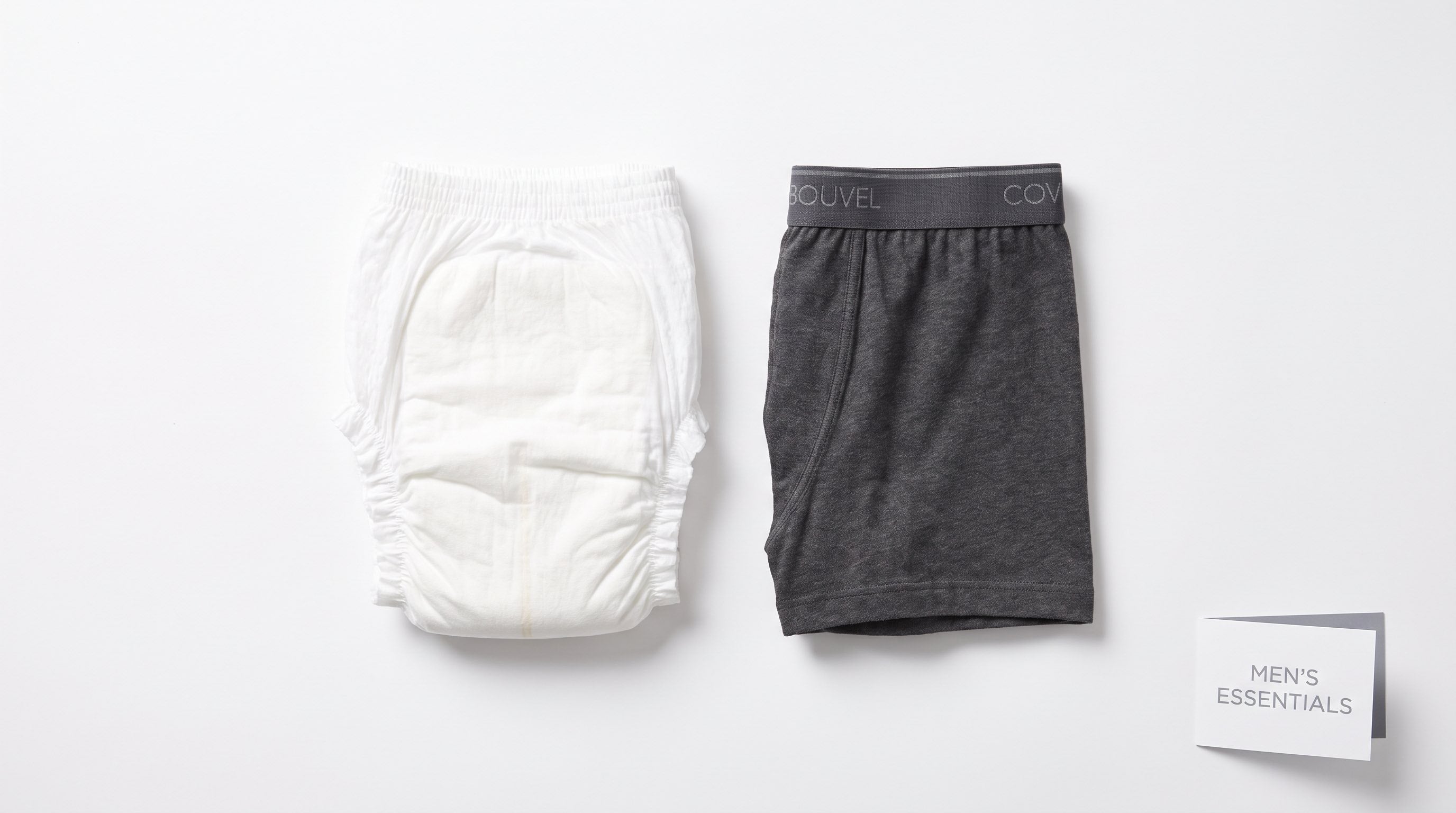
Most British men who finally decide to try washable incontinence underwear make the same mistake: they buy what they already know. If they've worn boxers their whole adult life, they grab boxer briefs. If they've worn briefs since their school days, they reach for a brief-cut. Within four weeks, a significant number are quietly returning to disposable pads — not because absorbent underwear doesn't work, but because they chose the wrong cut for their particular leak pattern. This guide explains the functional difference between briefs and boxer briefs for men managing bladder leaks in the UK, and how to get the decision right the first time.
Understanding Incontinence in British Men: A Quick Briefing
Bladder leakage affects roughly one in four men over the age of 40 in the UK, according to Bladder & Bowel UK. Despite those numbers, fewer than half ever speak to their GP about it — and even fewer seek out products specifically designed for male anatomy. Many men start with pads intended for women, or with general-purpose disposable products, before eventually discovering that purpose-built washable underwear offers far better discretion, comfort, and long-term value.
The NHS recognises several types of urinary incontinence common in men: stress incontinence (leaks triggered by coughing, sneezing, or physical activity), urge incontinence (a sudden, strong need to urinate), post-micturition dribble (drops released after finishing at the toilet), and overflow incontinence. Each type produces a different leak volume, location, and timing — and that directly influences which cut of incontinence underwear works best for you.
The Anatomy Argument: Why Cut Matters More for Men Than Women
Men's washable incontinence underwear is built with an absorbent gusset or panel positioned specifically for male anatomy — further forward and more centrally placed than products designed for women. However, the shape of the waistband, the length of the leg, and the overall fit of the garment determine how well that panel stays in contact with the body during movement. A panel that shifts even slightly loses its effectiveness. This is why choosing between a brief-cut and a boxer brief-cut is not a trivial aesthetic decision — it's a practical one.

Incontinence Briefs for Men: Pros and Cons
What are men's incontinence briefs?
Brief-cut incontinence underwear for men sits at the hip or waist, with a higher leg cut and minimal fabric coverage on the thigh. The absorbent panel wraps closely around the groin area. Think of traditional Y-fronts or classic briefs in terms of silhouette, but built with a multi-layer absorbent core — typically in bamboo fibre, cotton, or a combination — stitched into the gusset.
Pros of the brief cut
- Closer panel contact. The higher leg cut keeps the absorbent zone pressed firmly against the body, which is particularly effective for men managing post-micturition dribble or low-volume stress leaks. There's less fabric movement to displace the panel.
- Less bulk under clothing. For men who wear fitted trousers or tailored workwear, a brief cut sits flat and is far less visible than a boxer brief beneath slim-leg or straight-leg trousers.
- Cooler in warm weather. With less leg fabric, briefs are more breathable — an advantage in summer or for men who are physically active during the day.
- Easier to wear under compression garments. For men who wear support stockings or compression shorts following surgery, the brief cut creates less layering around the thigh.
Cons of the brief cut
- Not ideal for heavier leaks. Brief-cut underwear typically accommodates a smaller total absorbent panel. If you're managing urge incontinence with larger, sudden releases, a brief may not have the surface area to contain the leak before it reaches the leg opening.
- Can feel unfamiliar for lifelong boxer wearers. Men who have worn loose boxers for decades often find the snug fit of a brief uncomfortable initially, though most adapt within a few days.
- Leg gap risk during activity. Vigorous movement — cycling, jogging, or bending — can cause a brief's leg opening to shift, potentially allowing leakage to escape the gusset zone before the fabric absorbs it.

Incontinence Boxer Briefs for Men: Pros and Cons
What are men's incontinence boxer briefs?
Boxer briefs extend the leg to mid-thigh, combining the snug waistband fit of a brief with the additional coverage of a boxer short. The absorbent panel is typically wider and longer, offering more total absorption capacity. For men managing incontinence following prostate surgery or those with mixed urge-stress incontinence, boxer briefs have become the most commonly recommended cut by continence nurse specialists in the UK.
Pros of the boxer brief cut
- Greater total absorption area. The extended leg allows manufacturers to incorporate a larger absorbent zone, making boxer briefs suitable for moderate to heavy leaks as well as lighter, frequent dribbles.
- Panel stays in position during movement. The mid-thigh leg grips the body and prevents the garment — and its absorbent core — from riding up or twisting during physical activity. This is particularly important for men returning to exercise after prostate surgery.
- More forgiving fit across body shapes. Boxer briefs accommodate a broader range of body shapes, particularly for men who carry weight around the abdomen. The longer leg provides additional structural support that keeps the waistband in place.
- Familiar silhouette for most men. Boxer briefs have become the most popular everyday underwear cut for British men under 60. Transitioning to an incontinence version of a cut you already wear minimises the psychological adjustment.
- Better for overnight use. For men who experience nocturia (waking to urinate frequently at night) or light nocturnal leakage, the boxer brief's extended panel provides added security in multiple sleeping positions.
Cons of the boxer brief cut
- Visible line under fitted clothing. The mid-thigh hem can create a visible line beneath slim-fit or tailored trousers. This is rarely a functional issue but matters to men who dress formally for work.
- Warmer than briefs. Additional fabric coverage means less airflow to the thigh, which some men find uncomfortable in summer or during sustained physical activity.
- Bulkier feel at the start. The absorbent layer in a boxer brief is distributed over a wider area, which can create a slightly padded sensation initially — though this becomes imperceptible within a few days of wearing.
How to Match Your Leak Type to Your Cut
Rather than choosing based on what you wore before incontinence became part of your life, match your cut to your leak pattern:
- Post-micturition dribble (drops after finishing at the toilet): A brief-cut with a targeted absorbent gusset is usually sufficient and more comfortable for all-day wear.
- Stress incontinence (leaks during coughing, sneezing, lifting): Either cut works, but boxer briefs provide better panel stability during sudden abdominal pressure spikes.
- Urge incontinence (sudden, strong urge before reaching the toilet): Opt for boxer briefs with higher total absorption capacity — the wider panel manages larger sudden releases more effectively.
- Post-prostatectomy incontinence: Continence nurse specialists and the Continence Foundation consistently recommend boxer briefs for men in the early recovery phase, when leaks can be unpredictable in both volume and timing.
- Mixed incontinence: Boxer briefs are the more versatile choice when you're managing more than one leak type simultaneously.
What the NHS and Bladder & Bowel UK Recommend
The NHS advises men with incontinence to trial absorbent products alongside — not instead of — pelvic floor exercises and any treatment plan agreed with their GP or continence nurse specialist. Washable underwear is considered a long-term continence management product and may be discussed during a referral to a specialist continence service. Bladder & Bowel UK notes that washable products reduce environmental waste and long-term cost compared with single-use pads, and recommends men choose a product specifically designed for male anatomy rather than adapting products intended for women.
If your symptoms are new, worsening, or accompanied by pain, blood in the urine, or difficulty urinating, speak to your GP promptly. You can also call NHS 111 for urgent guidance without visiting A&E.

Orykas UK Product Recommendations
All Orykas UK incontinence underwear is made from OEKO-TEX Standard 100 certified bamboo fibre — independently tested to confirm the absence of harmful substances. Bamboo fibre is naturally temperature-regulating, moisture-wicking, and softer against sensitive or post-surgical skin than synthetic alternatives. Every garment is machine-washable at 40°C and, with correct care, maintains absorbency for two to three years — making washable incontinence underwear a significantly more cost-effective choice than a sustained reliance on disposable products.
For men managing chronic incontinence, Orykas UK products may qualify for VAT relief under the HMRC disability products scheme. Eligible customers pay no VAT on qualifying purchases — a straightforward saving worth checking before you order.
Brief cut
The 3 Pack Ultra Absorbent Men's Incontinence Briefs is the right choice for men who prefer a traditional brief fit, wear tailored or slim-fit clothing, and are managing light to moderate leaks including post-micturition dribble. Buying as a three-pack ensures you have enough in rotation for daily wear without daily washing.
Boxer brief cut — light protection
The 3 Pack Men's Light Leak Boxer Briefs suits men with mild, occasional leaks who want the security of absorbent underwear without the feeling of wearing a heavier product. The familiar boxer brief silhouette makes this an easy first step for men new to washable incontinence underwear.
Boxer brief cut — higher absorbency
The Men's Washable Incontinence Boxer is the most versatile option in the Orykas UK men's range. Its extended absorbent panel handles moderate to heavy leaks, and the mid-thigh leg keeps the panel in position during physical activity, travel, or a full working day. This is the garment most commonly recommended for men in post-prostatectomy recovery or those managing urge incontinence.
Related Orykas UK Advice
- What are the best protection options for men with bladder leaks?
- Urinary incontinence after prostate surgery: how long does it last and what are the solutions?
- How to stop urinary leaks in men?
- Urinary Leaks and the Prostate: Understanding the Connection
- Why do I have urinary leaks after I have finished urinating?
Frequently Asked Questions
Can I wear washable incontinence underwear to work without anyone knowing?
Yes. Both brief-cut and boxer brief-cut washable incontinence underwear are designed to look and feel like standard everyday underwear. There is no external bulk, no rustling sound, and no visible difference under clothing. The brief cut in particular sits completely flat beneath tailored or slim-fit trousers.
How many pairs do I need to buy?
A practical starting rotation is five to seven pairs, depending on your washing schedule. Buying a three-pack gives you a sensible starting point; most men then add a second pack once they've confirmed the cut and absorbency level that works for them. Three-packs also represent better per-unit value than buying individual garments.
Are bamboo incontinence boxer briefs suitable after prostate surgery?
Bamboo fibre is particularly well-suited to post-surgical skin because it is naturally hypoallergenic, breathable, and gentle against sensitive tissue. Many men find bamboo-fibre garments more comfortable than those made from cotton-synthetic blends in the weeks following prostatectomy. That said, always follow your surgical team's specific guidance on wound care and clothing during recovery.
How do I wash washable incontinence underwear to maintain absorbency?
Orykas UK garments are machine-washable at 40°C. Use a standard liquid detergent — avoid fabric softeners, as these coat the bamboo fibres and reduce their moisture-wicking and absorbent performance over time. Tumble-dry on a low setting or air-dry. Correct care maintains absorbency for two to three years of regular use.
Can I claim VAT relief on incontinence underwear in the UK?
If you have a chronic condition causing incontinence, you may be eligible for VAT relief on qualifying absorbent products under the HMRC scheme for disability products and services. This means paying no VAT at the point of purchase. You do not need a formal medical certificate to self-declare eligibility, though HMRC guidance recommends you confirm your condition meets the qualifying criteria. Check the Orykas UK product pages for details on applying relief at checkout, or visit the HMRC website for the full eligibility criteria.
Sources: NHS (nhs.uk/conditions/urinary-incontinence); Bladder & Bowel UK (bladderandbowel.org); Continence Foundation (continence-foundation.org.uk); HMRC VAT Notice 701/7: VAT reliefs for disabled people. This article is for informational purposes only and does not constitute medical advice. Speak to your GP or a continence nurse specialist for personalised guidance on managing urinary incontinence.
Share:
The 5 Worst Foods for Your Bladder — According to British Urologists
Orykas Reusable Velcro Pad for Men: Discreet Add-On Protection for Any Boxer