

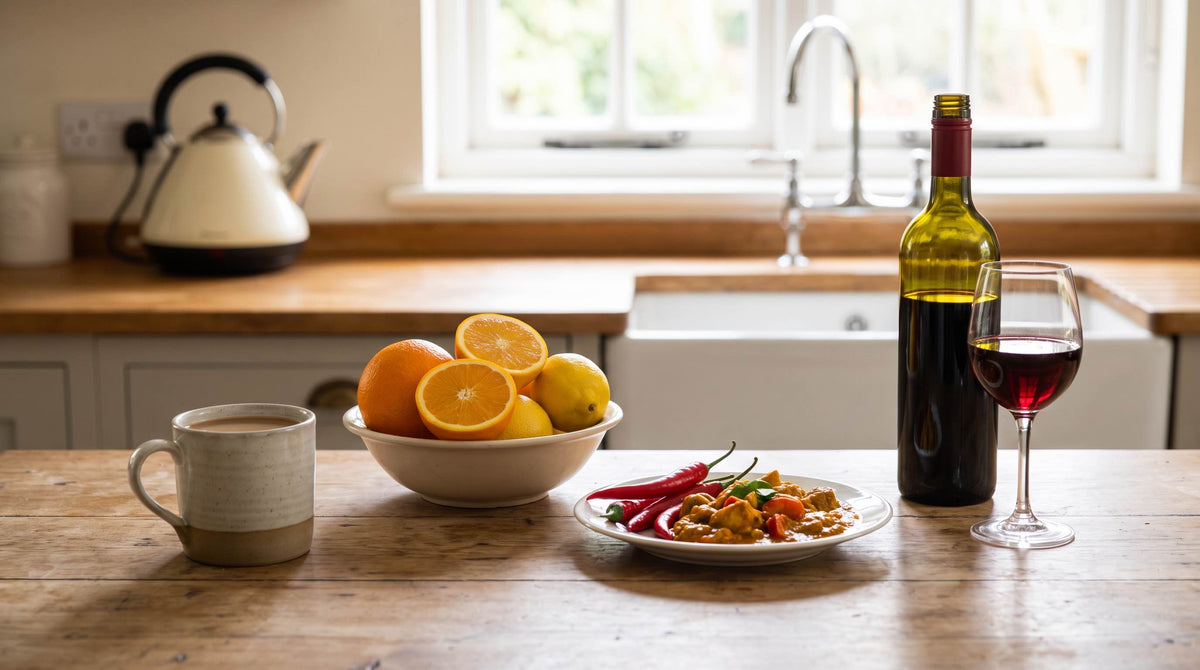
Most men don't think much about what's in their weekly shop — until a continence nurse specialist sits across from them and asks. It's often the moment they realise that the double espresso at breakfast, the pint of Guinness after work, and the extra-hot curry on Friday night might not just be cultural staples — they could be actively making their bladder leaks worse. Dietary triggers for urinary incontinence are well documented by the NHS and the British Association of Urological Surgeons (BAUS), yet they remain one of the most overlooked levers men have for managing their symptoms. The good news? You don't have to overhaul your entire lifestyle. Simply understanding which foods and drinks are irritating your bladder can make a meaningful difference to how often you're rushing to the loo — or leaking before you get there.
1. Caffeine — The Nation's Favourite Bladder Irritant
Britain runs on tea and coffee, which makes this one particularly hard to hear. Caffeine is a diuretic, meaning it causes the kidneys to produce more urine, and it also acts as a direct irritant to the bladder lining. According to NHS guidance on managing an overactive bladder, reducing caffeine intake is one of the first behavioural changes recommended — and for good reason. Studies cited by NICE in their urinary incontinence guidelines show that caffeine significantly increases urinary urgency and frequency in both men and women.
It's not just coffee and strong tea. Caffeine lurks in energy drinks, cola, hot chocolate, and even some over-the-counter pain relief tablets. The current advice from Bladder & Bowel UK is to keep caffeine intake below 200mg per day if you experience symptoms — roughly two cups of filter coffee. Switching to herbal teas or decaffeinated options for at least part of the day can produce noticeable improvements within a fortnight.
Practical tip: Try a two-week caffeine swap. Replace your afternoon coffee with peppermint or chamomile tea. Many men report a reduction in urgency episodes within days.
2. Alcohol — Double the Problem for Your Bladder
Alcohol creates a double whammy: like caffeine, it acts as a diuretic, increasing urine output. But it also interferes with the signals the brain sends to the bladder, reducing your ability to sense how full it is until it's almost too late. That combination of increased volume and delayed warning is a recipe for urgency incontinence.
BAUS acknowledges that while moderate alcohol consumption is a personal choice, men with lower urinary tract symptoms (LUTS) often find that even a couple of pints significantly worsens their night-time frequency (nocturia). Larger volumes of alcohol — a Friday-night session, a wedding — can trigger leaks the following morning as the body processes the excess fluid. Beer is particularly problematic due to its volume and carbonation, which we'll come to shortly.
The NHS recommends staying within 14 units per week and spreading consumption across several days, with alcohol-free days throughout. Men managing incontinence symptoms may find stricter limits more effective than the general population guideline.
Practical tip: Alternate alcoholic drinks with water when socialising. Choose spirits with still, low-sugar mixers over pints of beer or fizzy cider.

3. Spicy and Acidic Foods — Your Bladder Doesn't Love a Vindaloo
A Friday night curry is a British institution, but for men with bladder sensitivity, chilli-heavy dishes can trigger urgency and frequency that lasts well into the weekend. Spicy foods — particularly those containing capsaicin, the compound that makes chillies hot — are known to irritate the bladder wall and can trigger overactive bladder episodes.
Highly acidic foods cause similar problems. Citrus fruits (oranges, grapefruits, lemons), tomato-based products (tinned tomatoes, ketchup, pasta sauce), and vinegar-heavy foods like pickles and chutneys can all aggravate bladder symptoms. NICE clinical guidelines on urinary incontinence list acidic foods as a recognised irritant category. The mechanism is believed to involve the lining of the bladder reacting to low-pH substances as they pass through in urine.
This doesn't mean giving up flavour altogether. Many men find they can tolerate milder spice levels without triggering symptoms, or that cooking tomato-based sauces with a pinch of bicarbonate of soda reduces the acidity enough to make a difference.
Practical tip: Keep a bladder diary for a week — a tool recommended by NHS continence nurses — noting what you eat and when symptoms worsen. Patterns often become obvious within a few days.

4. Fizzy Drinks and Carbonated Water — The Bubbles That Bother Your Bladder
Even setting aside the caffeine in cola and the alcohol in beer, the carbonation itself is a bladder irritant. The bubbles in fizzy drinks increase bladder pressure, triggering the urge to urinate more quickly than the same volume of still fluid would. This is why many men notice urgency after a pint of sparkling water or a glass of lemonade, even when alcohol and caffeine aren't involved.
Bladder & Bowel UK advises swapping carbonated beverages for still alternatives as part of conservative management for overactive bladder. Sparkling water might feel like the healthy option — particularly for men cutting down on alcohol — but if you're experiencing urge leaks, it's worth switching to still water to see if symptoms improve.
Artificially sweetened diet drinks deserve a mention here too. Aspartame and saccharin have been reported by some patients to worsen bladder symptoms, though the evidence is more anecdotal than the carbonation data. The NHS recommends trialling their removal from the diet to assess individual sensitivity.
Practical tip: Aim for 1.5 to 2 litres of still water daily. Sipping steadily throughout the day — rather than drinking large amounts at once — keeps urine diluted and reduces irritation.
5. Artificial Sweeteners and Processed Foods — The Hidden Triggers in the Freezer Aisle
Many men managing incontinence are already watchful about obvious triggers like alcohol and caffeine, but continue to consume processed foods without considering their bladder impact. Artificial sweeteners found in diet yoghurts, protein bars, sugar-free squashes, and ready meals have been flagged by Bladder & Bowel UK as potential bladder irritants. Preservatives, additives, and high-sodium content in processed foods also play a role: excessive salt increases thirst and, in turn, urine volume.
Processed meats — sausages, bacon, deli meats — are often high in sodium and preservatives. A high-sodium diet causes the body to retain and then excrete more fluid, which means more trips to the loo. NICE guidelines on lower urinary tract symptoms in men recommend a diet broadly consistent with NHS Eatwell Guide principles: high in vegetables, wholegrains, and lean protein, and lower in ultra-processed foods and salt.
Men who shift away from processed foods frequently report improvements in bladder symptoms as a secondary benefit to the better-documented cardiovascular and metabolic gains.
Practical tip: Swap ready meals for simple batch-cooked alternatives where possible. Season with herbs rather than salt. Read labels on diet drinks and protein snacks for sweetener content.
What Else Can Help? Practical Steps Beyond the Plate
Diet is one piece of the puzzle. The NHS recommends a combination of bladder retraining, pelvic floor exercises (yes, for men too — your GP or a specialist physiotherapist can show you the correct technique), healthy fluid management, and, where necessary, continence products to maintain dignity and confidence while symptoms are being managed or treated.
If you've made dietary changes and symptoms persist, speak to your GP rather than suffering in silence. An NHS referral to a continence nurse specialist or a urologist is available on the NHS, and early intervention leads to better outcomes. NHS 111 can also direct you to the right support if your usual surgery is closed.
Related Orykas UK Advice
If you're managing bladder leaks day-to-day, you may also find these guides helpful:
- What are the best protection options for men with bladder leaks?
- Urinary incontinence after prostate surgery: how long does it last and what are the solutions?
- How to stop urinary leaks in men?
- Urinary Leaks and the Prostate: Understanding the Connection
- Why do I have urinary leaks after I have finished urinating?

Staying Confident While You Make Changes: Orykas UK Washable Incontinence Underwear
Dietary changes take time to have an effect — typically two to four weeks before you can meaningfully assess whether removing a particular trigger has improved your symptoms. In the meantime, managing leaks discreetly and comfortably is entirely possible with the right protection.
Orykas UK offers a range of washable incontinence boxer briefs made from OEKO-TEX Standard 100 certified bamboo fibre — a naturally breathable, odour-resistant material that feels nothing like traditional disposable pads or bulky protective underwear. The garments look and fit like regular underwear, with a discreet absorbent zone built directly into the fabric.
- The Men's Washable Incontinence Boxer is designed for moderate to heavier leaks, providing reliable protection throughout the day.
- The 3 Pack Men's Light Leak Boxer Briefs are ideal for men experiencing post-void dribble or light stress leaks — common after prostate surgery or with an overactive bladder.
- The 3 Pack Ultra Absorbent Men's Incontinence Briefs offers a higher-absorbency option for men who need greater coverage at night or during periods of higher activity.
All Orykas garments are machine-washable at 40°C and built to last up to two to three years with regular use — making them a significantly more cost-effective and environmentally responsible choice than disposable alternatives. Men with chronic incontinence may also be eligible for UK VAT relief under HMRC's disability products scheme, reducing the cost further. Details are available on the Orykas UK website at checkout.
Frequently Asked Questions
Can cutting out caffeine really reduce bladder leaks?
Yes, for many men it can. Caffeine is both a diuretic and a bladder irritant. NHS guidance specifically lists caffeine reduction as a first-line behavioural intervention for overactive bladder. A trial period of two to four weeks — reducing caffeine to under 200mg daily — is enough to assess whether it's a significant trigger for you personally. Some men notice a marked improvement in urgency and frequency within the first week.
How much should I be drinking if I have bladder leaks?
Reducing fluid intake is a common but counterproductive response to incontinence. Drinking too little concentrates the urine, which itself irritates the bladder. The NHS recommends 1.5 to 2 litres of fluid per day, primarily still water. The key is steady sipping throughout the day rather than large volumes at once, and reducing intake in the two hours before bed to limit nocturia.
Are there foods that are actually good for the bladder?
Yes. High-fibre foods — wholegrains, vegetables, and legumes — help prevent constipation, which puts pressure on the bladder and can worsen leaks. Foods rich in magnesium (dark leafy greens, nuts, seeds) have been associated with reduced bladder muscle overactivity in some research. Pears, watermelon, and cucumber are hydrating but low in bladder irritants, making them good alternatives to citrus fruit.
Should I see my GP about bladder leaks or try to manage them myself?
Dietary and lifestyle changes are an excellent starting point and are recommended by NICE as first-line management. However, if symptoms are significantly impacting your quality of life, if you notice blood in your urine, or if changes haven't helped after four to six weeks, you should speak to your GP. Urinary incontinence is a medical condition with effective treatments available on the NHS — including referral to a continence nurse specialist, physiotherapy for pelvic floor rehabilitation, and, where appropriate, medication or surgery.
Are washable incontinence briefs hygienic for everyday use?
When laundered correctly, washable incontinence underwear is entirely hygienic. Orykas UK garments are designed to be machine-washed at 40°C, which is sufficient to remove bacteria and odour. OEKO-TEX certified bamboo fibre has natural antibacterial properties that help manage odour between washes. With a recommended lifespan of two to three years and a multi-pack rotation, maintaining hygiene is straightforward and requires no specialist care products.
Sources and further reading: NHS – Urinary Incontinence (nhs.uk); NICE Clinical Guideline NG123 – Urinary Incontinence and Pelvic Organ Prolapse in Women (2019, updated); NICE Clinical Guideline CG97 – Lower Urinary Tract Symptoms in Men (2010, updated); British Association of Urological Surgeons (BAUS) – Patient Information on Overactive Bladder; Bladder & Bowel UK – Diet and the Bladder fact sheet. This article is for informational purposes only and does not constitute medical advice. If you are concerned about urinary symptoms, please consult your GP or contact NHS 111.
Share:
BPH and Bladder Leaks: What Every British Man Over 55 Should Know
Incontinence Underwear for British Men: Briefs vs Boxer Briefs — Which Cut Is Right?