

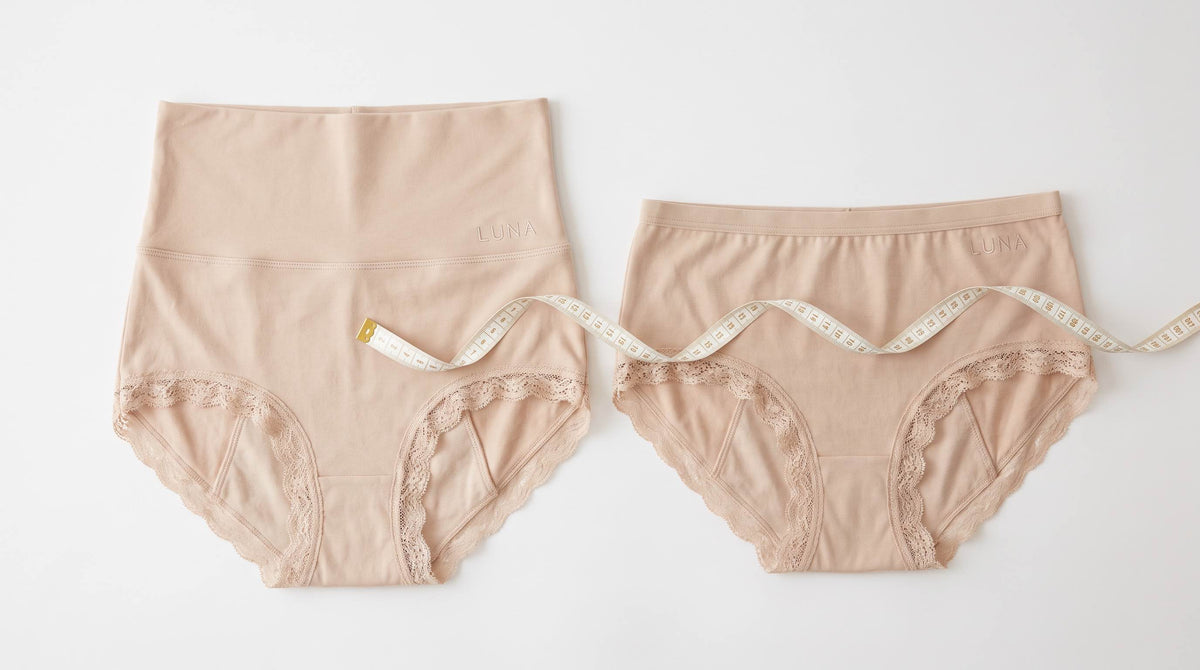
Sandra, 52, from Bath, has tried more incontinence products than she cares to count. "I thought the absorbency rating was everything," she told us. "But it was the cut that made the difference between feeling like myself and feeling like I was hiding something." She is far from alone. Millions of women across the UK manage bladder leakage every day — Bladder & Bowel UK estimates that roughly one in three women will experience urinary incontinence at some point in their lives — and yet the conversation about style rarely happens. We talk absorbency. We talk breathability. We rarely talk about whether a high-waist or mid-rise cut will actually suit your body shape, your wardrobe, and your day.
This guide fills that gap. Whether you are newly managing light leakage after childbirth or dealing with a more established pattern of urgency in your fifties, understanding how the rise of your incontinence knickers affects fit, comfort, and confidence is just as important as any technical specification.
Why Rise Matters More Than You Might Think
The "rise" of a pair of knickers refers to the distance between the crotch seam and the waistband. A higher rise sits closer to — or at — the natural waist; a mid-rise sits somewhere between the hip bone and the navel. For everyday underwear this is largely a style preference. For washable incontinence knickers, the rise directly affects how the absorbent gusset sits against the body, how securely the garment stays in place during movement, and how discreetly it sits beneath your clothing.
The NHS acknowledges that choosing comfortable, well-fitting continence products is an important part of managing daily life with incontinence. A poor fit — gaps, rolling waistbands, or bunching fabric — can reduce both the protective function and your own sense of ease. A continence nurse specialist would always recommend trialling different styles before committing to a bulk order.
High-Waist Incontinence Knickers: The Case For Going Higher
High-waist styles have experienced a well-deserved renaissance. Once dismissed as purely functional, a well-designed high-waisted pair now offers a silhouette that many women actively prefer — and for those managing incontinence, the structural advantages are considerable.
Pros of High-Waist Incontinence Knickers
- Secure gusset positioning: Because the waistband anchors higher on the torso, the absorbent panel stays firmly in contact with the body. This is particularly important for women managing urge incontinence, where leakage can occur rapidly and unexpectedly.
- Abdominal support: Many women in their forties and fifties — particularly those who have had caesarean sections or abdominal surgeries — find that a higher waistband provides gentle core compression that feels reassuring rather than restrictive.
- Stays put during activity: Walking, gardening, a fitness class — a high-waist garment is less likely to migrate downward or twist during movement, which keeps the protective zone exactly where it needs to be.
- Works well with high-waisted trousers and skirts: Paradoxically, many women find high-waist knickers create a smoother line beneath tailored trousers or midi skirts than their mid-rise counterparts, because there is no fabric bunching at the waistband junction.
- Thermal comfort: The additional coverage can feel particularly welcome in cooler months.
Cons of High-Waist Incontinence Knickers
- Can feel warm in summer: More fabric coverage means more warmth — worth bearing in mind if you tend to run hot or live in a warmer part of the country.
- Visible waistband line: Under fitted jersey dresses or low-slung jeans, the waistband may create a visible ridge. Styling thoughtfully (looser tops, A-line skirts) resolves this easily.
- May not suit all body proportions: Women with a shorter torso sometimes find that a very high waistband feels restrictive when sitting. Trying before committing to multiple pairs is wise.
Best suited to: Women with a longer torso, those managing moderate to heavy leakage who need maximum gusset security, anyone who values additional abdominal coverage, or those wearing high-waisted daywear.


Mid-Rise Incontinence Knickers: The Case For a Classic Cut
Mid-rise knickers sit at the hip-to-navel zone — broadly where most women's everyday underwear traditionally sits. For many women, this is simply the most familiar and comfortable position for a waistband, which makes the transition to absorbent styles feel far less daunting.
Pros of Mid-Rise Incontinence Knickers
- Familiar fit: If you have worn standard mid-rise knickers for years, this style will feel immediately normal rather than medicinal. Psychological comfort matters enormously when you are adapting to a new continence routine.
- Versatile wardrobe pairing: Mid-rise styles pair naturally with the widest range of clothing — jeans, straight-leg trousers, casual dresses — without risk of waistband visibility.
- Cooler in warmer weather: Less fabric coverage at the midriff makes these a sensible choice in summer or for women prone to overheating.
- Comfortable for shorter torsos: Women who find full-coverage styles restrictive across the abdomen typically find mid-rise far more comfortable during prolonged sitting or driving.
- Easier to manage in a hurry: For women with urgency incontinence who need to reach the loo quickly, a mid-rise waistband with a flexible construction can be quicker to lower than a firm high-waist panel.
Cons of Mid-Rise Incontinence Knickers
- Gusset can shift during movement: Without the anchor of a higher waistband, the absorbent panel may migrate slightly during vigorous activity. This is less of a concern for light leakage but worth noting for anyone managing heavier flow.
- Less abdominal coverage: Women who want the reassurance of core compression will not find it here.
- Can roll down on fuller figures: On rounder midriffs, a mid-rise waistband may have a tendency to roll. Choosing a style with a wide, elasticated waistband helps to prevent this.
Best suited to: Women managing light to moderate leakage, those with shorter torsos or sensitivity around the midriff, anyone who prioritises a conventional underwear feel, and warmer months or active summer days.
What Body Shape Should Guide Your Decision?
Your body's proportions are often the most reliable guide. As a starting point:
- Apple or fuller midriff: High-waist styles with a broad, smooth waistband tend to distribute pressure more evenly and avoid the dreaded mid-roll. Look for styles made from a soft stretch fabric with no rigid seaming across the abdomen.
- Pear shape or fuller hips: Both rises can work well. High-waist styles provide coverage across the widest point of the hip; mid-rise styles allow the hip curve to do the work of holding the garment in place.
- Straight or athletic frame: Either works. Mid-rise is typically the simpler daily choice; high-waist adds a flattering definition at the natural waist.
- Short torso: Mid-rise is generally more comfortable. A very high waistband can feel like it is encroaching on the ribcage when seated.
- Long torso: High-waist styles fill the proportional gap beautifully and prevent fabric bunching at the lower abdomen.
Bladder & Bowel UK recommends that women experiencing persistent incontinence seek an assessment from their GP or a continence nurse specialist, who can advise on product selection alongside clinical management options such as pelvic floor physiotherapy.
Clothing Compatibility: A Practical Guide
The most technically excellent pair of incontinence knickers will not get worn if they create visible lines beneath your favourite outfit. Here is a quick compatibility reference:
- Tailored trousers or smart workwear: High-waist wins — smooth panel construction eliminates the VPL (visible panty line) at the hip.
- Jeans (regular or wide-leg): Mid-rise is typically the tidier fit, sitting below the denim waistband without creating bulk.
- Jersey midi or maxi dresses: High-waist offers a smoother silhouette; choose a seamless or laser-cut edge finish if available.
- Activewear or gym leggings: High-waist, firmly — the compression keeps the garment in place during lateral movement and impact.
- Summer dresses and skirts: Either works depending on cut. Mid-rise tends to feel lighter and cooler beneath floatier fabrics.

Orykas UK Product Recommendations
All Orykas UK washable incontinence knickers are crafted from OEKO-TEX Standard 100 certified bamboo fibre, which is naturally breathable, antibacterial, and gentle on sensitive skin. Every pair is machine-washable at 40°C and built to last two to three years with regular laundering — making them a significantly more sustainable and cost-effective choice than disposable alternatives. As continence products qualifying for HMRC's disability-products VAT relief scheme, eligible customers with chronic incontinence can purchase them free of VAT — a saving worth noting at the point of purchase.
For Heavy Leakage: Maximum Protection at Any Rise
The Women's Washable Incontinence Pants for Heavy Leakage are designed for women managing significant urinary leakage. The multi-layer absorbent gusset extends generously front to back, and the broad waistband ensures the protective zone stays firmly in position throughout the day. Ideal for moderate to heavy incontinence, post-surgical recovery, or high-impact activity.
High-Waist Confidence: Our Signature Style
The Women's High-Waisted Washable Incontinence Pants are the option Sandra from Bath eventually settled on. The high-rise silhouette anchors the absorbent panel precisely, offers gentle abdominal coverage, and sits smoothly beneath tailored workwear. Available in classic colours designed to look indistinguishable from everyday premium underwear.
A Mid-Rise Option With a Feminine Touch
The Women's Lace-Waistband Washable Incontinence Pants bring a delicate lace trim to a practical mid-rise cut. For women who found that managing incontinence meant abandoning beautiful underwear, these are a gentle but effective rebuttal of that idea. The soft waistband lace sits flush against the skin without digging, and the bamboo-fibre interior remains as breathable and absorbent as our full-coverage styles.
Related Orykas UK Advice
- Urinary incontinence in women: natural treatment, what really works
- Urinary Leaks in Women: Causes, Types, and When to See a Doctor
- How to stop urinary leaks in women: complete solutions
- Urinary protection for women: complete 2026 guide
Frequently Asked Questions
Can I wear high-waist incontinence knickers under low-rise jeans?
You can, though the waistband may be visible above the denim — which many women find perfectly acceptable or solve by tucking a longer top over the waistline. If this bothers you, a mid-rise style is the more practical choice for low-rise clothing.
Will washable incontinence knickers feel different from regular underwear?
Good-quality bamboo-fibre washable incontinence knickers are designed to be worn as everyday underwear — they are not bulky or crinkly in the way that disposable pads can feel. The absorbent gusset adds a small amount of fabric to the lining, but when well fitted, most women report that they feel normal within the first day of wear.
How do I know if I qualify for VAT relief on incontinence products in the UK?
Under HMRC's VAT relief scheme for disabled people and people with chronic conditions, washable incontinence products are zero-rated for VAT when purchased by someone with a qualifying condition. Chronic urinary incontinence typically qualifies. You declare your eligibility at the point of purchase. If you are unsure, your GP or continence nurse specialist can confirm your diagnosis in writing. HMRC's guidance (VAT Notice 701/7) sets out the full criteria.
How many pairs should I buy to cover my weekly laundry cycle?
A practical starting point is five to seven pairs, allowing you to launder every two to three days without running short. Because Orykas UK knickers are machine-washable at 40°C with a standard laundry cycle, they fit easily into a normal household routine. Building up gradually — starting with two or three pairs in the style you think suits you — lets you confirm fit and comfort before committing to a full week's supply.
Should I consult a healthcare professional before choosing a style?
If you have only recently begun experiencing bladder leakage, or if the pattern has changed significantly, speaking to your GP is a sensible first step. The NHS offers referrals to continence nurse specialists who can assess your specific type of incontinence — stress, urge, or mixed — and advise on both clinical management and appropriate continence products. You can also call NHS 111 for non-emergency guidance. Choosing the right style of washable knickers is one part of a broader continence management plan, not a substitute for clinical advice.
Sources: NHS — Urinary Incontinence (nhs.uk/conditions/urinary-incontinence); Bladder & Bowel UK (bladderandbowel.org); NICE Clinical Guideline CG171 — Urinary Incontinence in Women; HMRC VAT Notice 701/7 — VAT Relief for Disabled People. This article is for informational purposes only and does not constitute medical advice. Always consult your GP or a continence nurse specialist regarding the management of urinary incontinence.
Share:
5 Pelvic Floor Exercises You Can Do at Your Desk — No One Will Notice
The Orykas Reusable Velcro Pad: Clip-In Protection for Your Favourite Knickers