

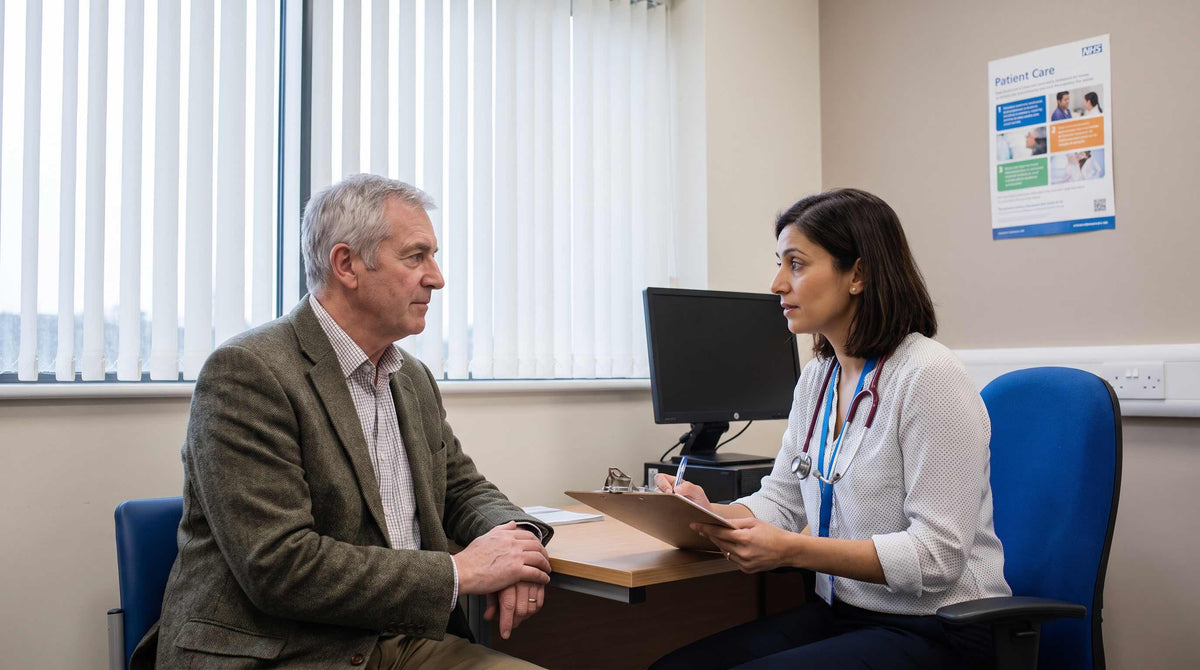
It's 10 am on a Sunday in Manchester. Derek, 67, is lacing up his football boots for the first time in four months. He's played Sunday-league at his local club since he was 22, but four weeks after his radical prostatectomy on the NHS, the thought of running for a 50-50 ball — and leaking through his shorts in front of his mates — nearly keeps him on the sofa. He is not alone. Roughly one in two British men will experience some degree of urinary incontinence in the weeks and months after prostate surgery, according to Prostate Cancer UK.
Why urinary leaks happen after prostate surgery
Radical prostatectomy — the surgical removal of the prostate gland, usually for cancer — is one of the most common major operations offered by the NHS to British men each year. During surgery, the external urethral sphincter (a ring of muscle that keeps urine in the bladder) is often irritated, stretched, or temporarily weakened. The internal sphincter, which sits at the bladder neck, is always cut away with the prostate itself. The result, in the short term, is stress urinary incontinence: leaks when you cough, sneeze, laugh, lift a heavy bag, or run for the bus.
According to NICE guideline NG203 on lower urinary tract symptoms in men, most of this post-surgical leakage resolves within 6–12 months with conservative treatment. Around 5–10 % of men will still experience bothersome leaks a year on and may benefit from further intervention — most commonly pelvic-floor rehabilitation, but in some cases an artificial urinary sphincter (AUS) fitted under the NHS.
The NHS recovery pathway: what to expect
When you're discharged from your NHS hospital after a robotic or open radical prostatectomy, you'll leave with a urinary catheter in place (usually for 7–14 days). Here's the typical British pathway, informed by BAUS and the NHS:
- Week 1–2: Catheter in, plenty of rest, short walks, no driving. Your district nurse or clinic will remove the catheter.
- Week 2–6: Leaks are typically at their worst. Most men need several absorbent pads or washable incontinence boxer briefs a day.
- Week 6–12: Pelvic-floor exercises (see below) kick in. Many men notice a clear improvement.
- Month 3–12: Steady recovery. By 12 months most British men are either dry or only leaking occasionally with heavy exertion.
Ask your urology team about a referral to an NHS continence nurse specialist and a men's-health physiotherapist. In many trusts these services are free and waiting times have improved since 2025.

Pelvic-floor exercises: the single most effective step
Start pelvic-floor exercises (sometimes called Kegels) before surgery if you can, and resume the day your catheter is removed. The NHS recommends:
- Sit, stand or lie down comfortably.
- Squeeze the muscles you would use to stop yourself passing wind or cut off a stream of urine. Hold for 5 seconds, then release for 5 seconds.
- Repeat 10 times. Do three sets a day — morning, lunchtime and evening.
- Build up to holds of 10 seconds within a month.
The Pelvic, Obstetric and Gynaecological Physiotherapy (POGP) network provides NHS-aligned leaflets written for British men. Ask your consultant urologist for a copy or search for "NHS Squeezy app" on the App Store — it's recommended by many NHS trusts.
Protection during recovery: disposables vs washable underwear
In the first weeks after surgery, many men reach for the disposable incontinence pads available at Boots or on NHS prescription. They do the job — but they add up. At £30–£50 a week, a British man can spend £1,500 over the first year of recovery on single-use pads, plus the environmental cost of 7–10 pads going to landfill each day.
Washable bamboo fibre incontinence boxer briefs — like the Orykas men's ultra-absorbent boxer briefs or the 3-pack of ultra-absorbent incontinence briefs — are a British-designed alternative. They absorb the equivalent of several disposable pads, can be machine-washed up to 200 times at 40 °C, and look and feel like normal underwear under jeans, trousers or football shorts.
A full drawer (5–7 pairs) costs roughly the same as 2–3 months of disposables and typically lasts 2–3 years of daily wear. For British men with chronic incontinence, these products may also qualify for UK VAT relief under HMRC's disability-products scheme — ask about the self-declaration form at checkout.

Talking to your GP and NHS team
If leaks are still significant at 3 months, book a double appointment with your GP and bring:
- A 3-day bladder diary (how often you go, how much, triggers).
- A list of which exercises you've been doing and for how long.
- A note about impact on sleep, work, exercise and mood.
Your GP can refer you back to urology for further assessment. NHS options at this stage include intensive pelvic-floor rehab, bulking agents, a male sling, or (in stubborn cases) an artificial urinary sphincter. British waiting times for AUS surgery in 2026 are typically 6–18 months depending on trust.
Derek's Sunday league
Derek went back to football on week 10 wearing a pair of Orykas washable boxer briefs under his kit. He leaked a little — which he'd braced himself for — but nobody noticed, nothing soaked through, and he scored in the second half. That's the quiet goal of recovery: not perfection, but confidence to go back to the life you had.
Frequently asked questions
How long does urinary incontinence last after prostate surgery?
Most British men are dry or nearly dry within 6–12 months of radical prostatectomy. About 5–10 % still have bothersome leaks at 12 months and should ask their NHS urology team about further options.
Are washable incontinence boxer briefs available on the NHS?
Washable incontinence underwear is not routinely provided on NHS prescription, but disposable pads often are. British men can buy washable options like Orykas online and may qualify for UK VAT relief on chronic incontinence.
When can I start pelvic-floor exercises after a radical prostatectomy?
Restart pelvic-floor exercises the day your catheter is removed — typically 7–14 days after surgery. The NHS recommends three sets of 10 contractions a day.
Can I play football or go to the gym while I'm still leaking?
Yes. Start with lower-impact activity (walking, cycling), wear a washable incontinence boxer brief with high absorbency, and build up. Most men return to Sunday-league football or gym workouts within 8–12 weeks.
When should I call NHS 111 or my urology team?
Contact NHS 111 or your urology specialist nurse immediately if you suddenly cannot pass urine, develop a high fever, see heavy blood in your urine, or have severe pain — these may be signs of urinary retention or infection.
Sources: NHS (nhs.uk), NICE guideline NG203, Prostate Cancer UK, BAUS, POGP. Medical information in this article is for general guidance only and does not replace advice from your GP or NHS urology team.
Share:
Male Nighttime Incontinence: Causes and Complete Solutions
Post-Prostatectomy Pelvic Floor Exercises: A 12-Week NHS-Aligned Programme